
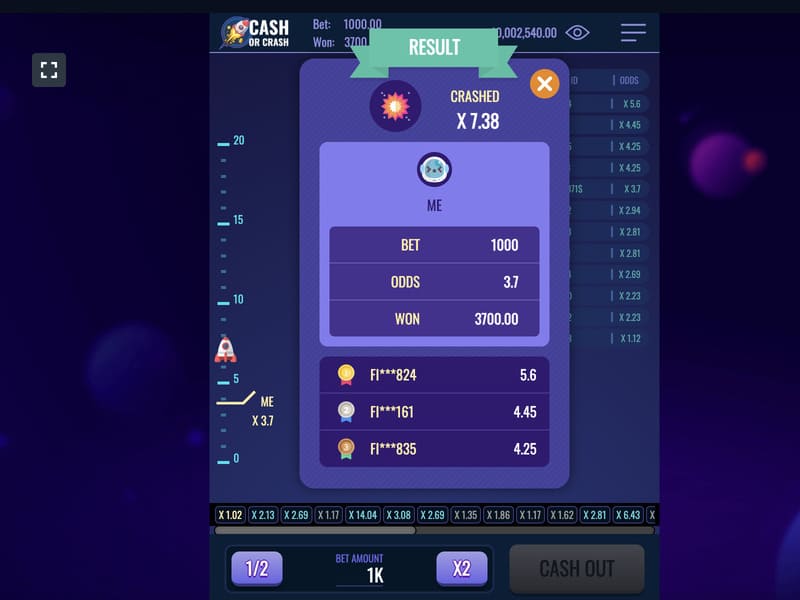
When we analyze the workings of live game shows like Cash or Crash Live, we discover components intended to provide players a sense of command within a high-volatility context https://cashorcrashlive.net. The Block tool shines as amongst the most key tactical tools accessible to UK players. Different from the main game of chance, where a unpredictable multiplier can crash at any time, the Block allows a participant to proactively ‘lock in’ a share of what they could win before the unavoidable crash takes place. It changes a purely spectator activity into a more interactive, strategic one. We view its use as a essential risk-management strategy, separating informal play from more deliberate methods. For the UK players, where gaming is often viewed through a lens of both enjoyment and savvy involvement, learning to use this tool is crucial to dealing with the game’s inherent struggle between desire for more and protection.
What the Block Function In Reality Entails
Fundamentally, the Block function in Cash or Crash Live is a simple yet powerful safety mechanism. Throughout a round, as the multiplier increases, a player can click the Block button to guarantee a slice of their possible payout. This move creates a secure baseline for that round’s winnings. If the round crashes at a value below the point they set their block, they are still awarded the blocked amount. If the round exceeds the block point, their possible payout rises further, but the blocked sum is safe. It’s important to realize that activating the Block does not terminate your involvement in the current round; your current multiplier stays in play, but you have a safety net. We consider this dual-mode experience—being both safe and still in the game—to constitute the feature’s mental appeal. For British players, it deals with the age-old problem of figuring out when to secure winnings, a notion recognized from everything from the stock market to a tense round of a pub quiz.
Common Blocking Mistakes you Should Avoid
Through our analysis of gameplay, we’ve noted several typical pitfalls UK players should be mindful of when using the Block. The most prevalent mistake is blocking out of fear at the first sign of a rising multiplier, often at a level so low it barely pays for the initial stake. This negates the function’s goal of securing substantial profit. Conversely, greed causes the error of never blocking at all, treating every round as an all-or-nothing gamble, which statistically erases gains over time. Another nuanced error is placing the block at a particular, psychologically important number like 5.0x, which many other players are also apt to use. If a crash is engineered to frequently occur just below such typical thresholds, this strategy can misfire. We suggest players to change their block points and found them on a pre-defined strategy rather than emotional impulses during the heat of the round.
Comparing Block to Auto-Cash-Out
It’s essential to separate the Block function from the individual Auto-Cash-Out feature, as UK players occasionally conflate the two. Auto-Cash-Out is a configure-and-ignore tool where you set a multiplier at which your entire bet is automatically cashed out, terminating your participation in that round fully. The Block function is more subtle. It does not end your round; it simply secures a part of your winnings while your live bet continues to ride. This signifies you can still profit from a climbing multiplier after blocking, which is unattainable with Auto-Cash-Out. We regard Auto-Cash-Out as a tool for discipline, enforcing a rigid profit target. The Block, though, is a tool for risk management and opportunity optimisation. A astute UK player might use both in tandem—for illustration, configuring a cautious Auto-Cash-Out at 10x but using a manual Block at 4x to guarantee a minimum profit well before that target.
Well-planned Pacing for UK Users
Strategic utilization of the Block centers on scheduling, and UK players often develop patterns based on noted gameplay patterns and individual risk tolerance. No one can say no globally perfect time, which is why it is a topic of such debate. Several recommend an initial block, maybe at a conservative 1.5x or 2x multiplier, to secure a modest but steady profit, growing a bankroll steadily and soundly. Other players, chasing greater returns, will let the multiplier climb much higher before deploying their block. We analyse that many seasoned participants in the UK employ a mixed strategy, adjusting their block level according to the behavior of previous sessions. For instance, upon a number of in a row small multiplier busts, certain players could deploy earlier, anticipating a tendency. Conversely, after a large multiplier, the following session might see users delaying their block, expecting a repetition. The key is that the decision is dynamic and situational, transitioning the user from a passive bystander to an active decision-maker, handling their own exposure.
Psychological Influence on Play
The addition of the Block feature dramatically changes the psychological dynamic of Cash or Crash Live. Without it, the game is a true test of courage, a binary “cash out or bust” outcome that frequently results in regret—either from exiting prematurely or crashing with nothing. The Block mitigates this by offering a third, reassuring choice. It eases the fear of total loss, which in turn can result in calmer and more gainful decisions. We note that UK players utilizing the Block commonly state they feel more in command, which increases their pleasure and involvement with the game. However, it also introduces new forms of mental stress, like the frustration of blocking at 3x only to see the multiplier increase to 10x. This “fear of missing out” (FOMO) is a powerful force, and learning to control the emotional response to a well-timed or mistimed block is equally crucial as mastering the timing.
In what manner UK Regulations Shape Feature Use
The use of tools like the Block is not an isolated event; it is shaped by the UK’s stringent gaming regulations and responsible gaming context. The UK Gambling Commission mandates that games include clear information and tools that encourage player control. The Block function is in perfect alignment with this ethos, as it is a concrete tool for risk management and reducing losses. Additionally, the prevalence of detailed game statistics and history, which UK-licensed platforms must provide, directly contributes to Block strategy. Players can examine past rounds to inform their timing, adding an analytical element to the game. We also note that the UK sector’s stress on transparency implies the functioning of the Block are clearly explained, eliminating misinterpretation. This regulatory environment encourages a more cautious, strategic mindset to the gameplay, where the Block is seen not just as a button, but as a central component of informed play.
Creating a Individual Block Approach
Formulating a unwavering individual strategy for the Block is the trademark of a considerate Cash or Crash Live player in the UK. We advise starting with a bankroll handling plan: decide what portion of your session stake you are prepared to risk per round and what constitutes a profitable profit target. Your Block strategy should meet these goals. One technique is the “tiered block,” where you block a modest percentage of your potential winnings at a small multiplier, another chunk at a middle multiplier, and let the balance ride. Another is the “fixed profit” approach, where you compute the precise multiplier needed to obtain a set profit and block there every time, disregarding the allure of higher multipliers. Crucially, any plan must be documented and adhered to before you start playing, as in-play emotions will cloud reasoning. The Block is a strong tool, but its strength is only realized through controlled, deliberate execution.